Imagerie diagnostique
Avertissement : Les informations suivantes sont fournies à titre éducatif uniquement et ne constituent pas un avis médical. Consultez toujours un professionnel de la santé pour un avis médical et un traitement.
L'imagerie diagnostique est un terme générique désignant diverses techniques permettant de visualiser l'intérieur du corps. Voici différents exemples d'examens d'imagerie que vous pourriez être amené à passer :
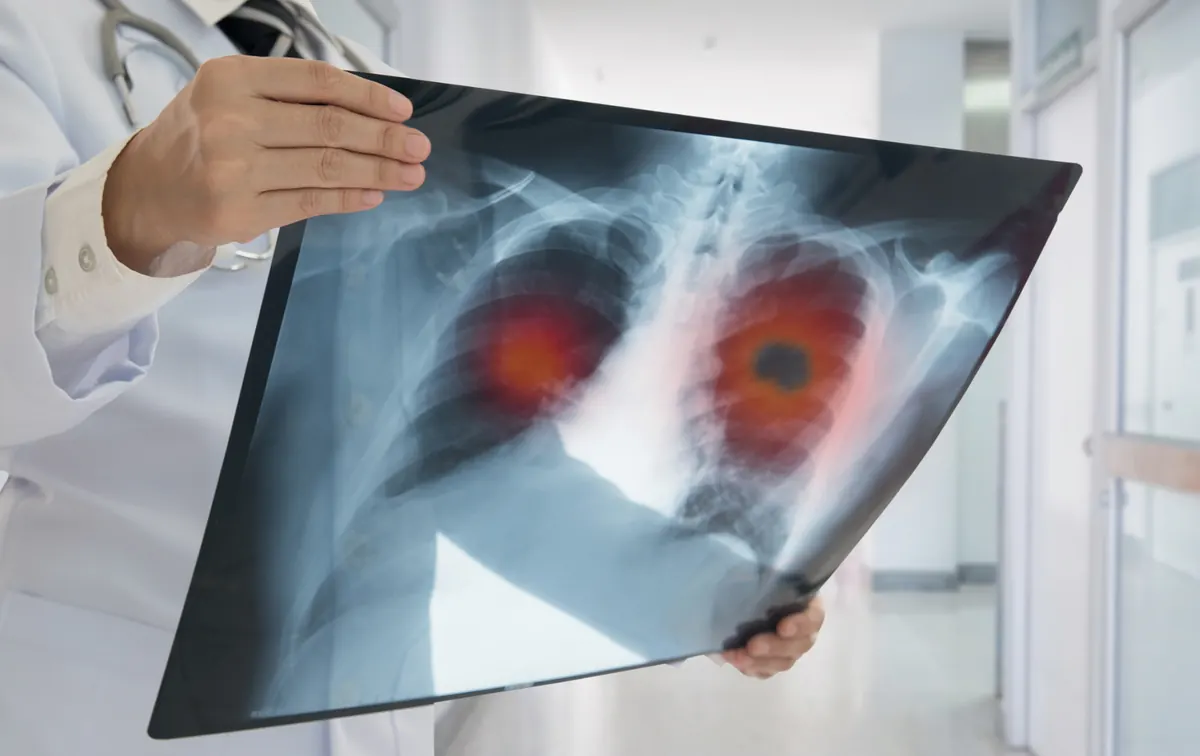
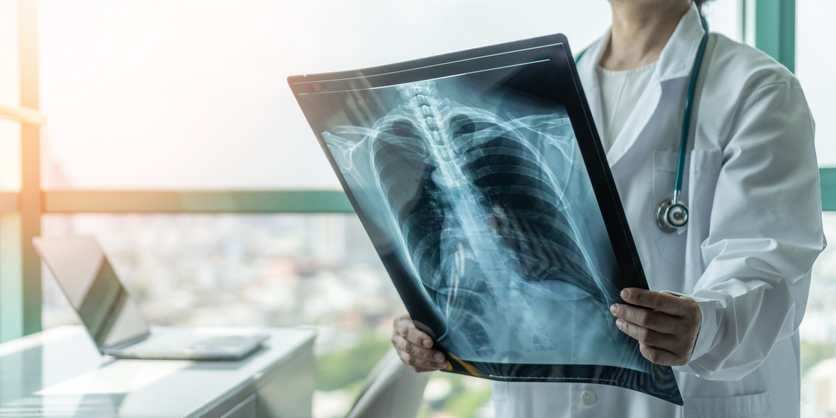
Une radiographie est une image numérique bidimensionnelle créée à l'aide de rayons X. Le rayonnement X est une forme de rayonnement électromagnétique, comme la lumière visible mais avec une longueur d'onde beaucoup plus courte. Différents types de tissus laissent passer des quantités variables de ce rayonnement. La radiographie thoracique est l'examen d'imagerie le plus simple à réaliser. Elle est rapide et peut être utilisée pour détecter d'éventuelles tumeurs, bien que toutes ne soient pas visibles sur une radiographie.
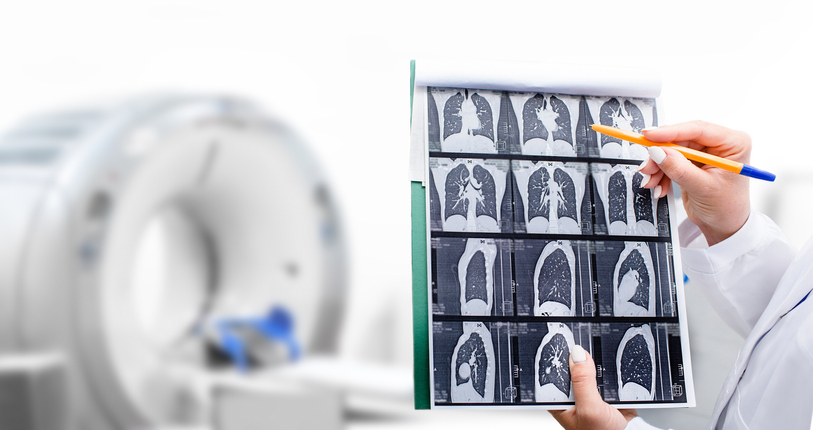
CT signifie tomodensitométrie (ou scanner). Lors d'un scanner, (une partie de) le corps est imagé tranche par tranche sous différents angles, puis les différentes images en coupe sont combinées en une seule image. Comme la radiographie, le scanner utilise des rayons X, mais au lieu d'une image bidimensionnelle, il crée une image tridimensionnelle. Un tel examen est plus précis et peut détecter des zones et des lésions plus petites qui pourraient ne pas être visibles sur une radiographie, comme l'espace entre les poumons ou des tumeurs cachées derrière un os ou le cœur. D'éventuelles métastases et des ganglions lymphatiques élargis peuvent également être visualisés sur un scanner.
IRM signifie imagerie par résonance magnétique, également appelée RMN (résonance magnétique nucléaire) ou RM (résonance magnétique). Comme pour un scanner, une IRM produit des images de coupes successives (d'une partie) du corps qui peuvent être combinées en une image tridimensionnelle. Au lieu de rayons X, un champ magnétique puissant est utilisé. Les IRM fournissent des informations encore plus détaillées que les scanners, en particulier pour les tissus mous. Le médecin déterminera quand une IRM est nécessaire, notamment pour détecter des métastases cérébrales grâce à cette technique.
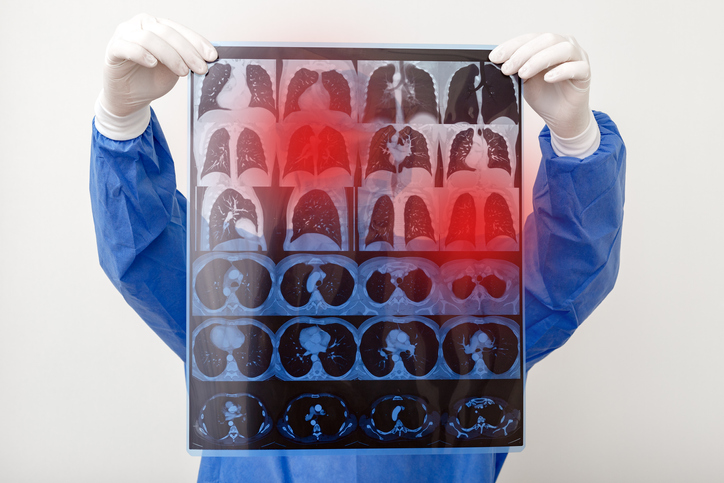
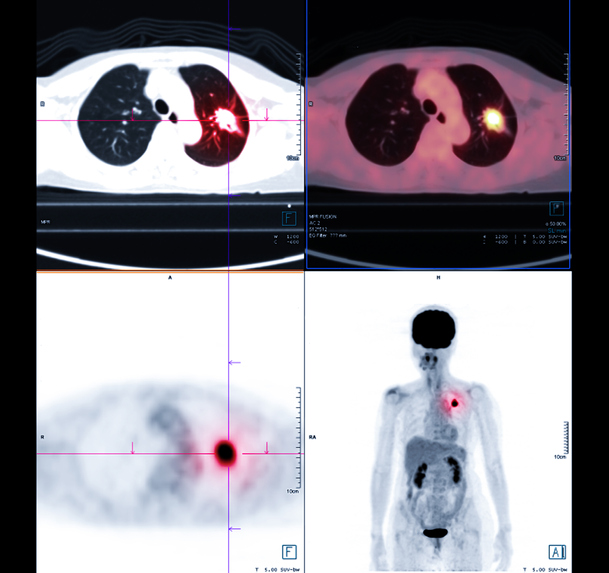
PET signifie tomographie par émission de positons. Un PET-scan est utilisé pour détecter les zones présentant un métabolisme anormal. Les cellules cancéreuses ont le plus souvent une captation accrue de glucose afin de produire l'énergie et les éléments de base nécessaires à leur croissance et à leur prolifération. Grâce à l'injection de glucose marqué (glucose radioactif), un PET-scan peut détecter les zones présentant une activité accrue. Pour localiser précisément ces zones, et donc les cellules cancéreuses, le PET-scan doit être associé à un scanner (CT). Cet examen est généralement demandé pour confirmer la présence d'une lésion pulmonaire suspecte et pour détecter des métastases ou une récidive d'une tumeur déjà traitée avec succès, ainsi que plus tard, pendant ou peu après le traitement, afin d'en évaluer l'efficacité.